
Blagetty Blogetty Bragitee!

My Photo
Name:
Location: United Kingdom

Some people know me as OrangeBlossomer because that's me on Twitter. This blog is a random collection of daily musings about life and stuff I love, such as journalism, dog (sadly my dog died in 2010 so probably no more), women, love and lack of love, boobs (only seldom but it does get me extra online traffic), taichi (I practise) and spirituality (should practise more). I have a day job as a jetsetting publishing foreign rights manager but I am also an NCTJ-qualified journalist and a writer/columnist at heart. Writing is my opium.

Sunday, 17 August 2014

Depression and the social media trap

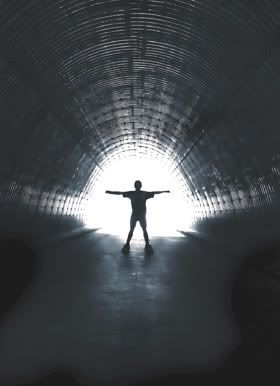
CC image courtesy of Penelope's Loom on Flickr
It is amazing the ripples that news of a celebrity suicide can trigger in social media circles. Since the first reports of Robin William's death started circulating earlier this week, half a dozen friends and colleagues "came out" on blogs or social networking sites about their own depression and accounts of suicide attempts.

Mary Hamilton, from the Guardian, who never made secret of the her battles with mental health, wrote an excellent post on her blog, later published in the Comment is Free section, condemning the way in which some newspapers reported suicide, with little consideration to the increased risk to the vulnerable and the depressed.

A Facebook friend publicly admitted she has been on "happy pills" for years since her divorce and still relies on them to function normally, despite her having found happiness again. A colleague revealed in a blog post that she tried to kill herself as a teenager and questioned why the event has always been shrouded in silence.

While I read in the Guardian that less than a third of people with mental health problems in the UK get treatment at all, a journalist friend was posting on Facebook horrendous details on the way in which her partner had taken his life under the care of the NHS. And how she too subsequently became suicidal.

Chain reaction
Each depressive that "came out" triggered a few more "me toos".

Had Facebook been in the midst of conducting their cheeky experiment on emotional contagion through social networks, to prove that a controlled feed of mostly sad posts would invite other sad posts, they'd have had a field day.

Sighs of relief were almost audible on Facebook, as everyone realised they were not the only ones battling inner demons, that there was no shame is publicly admitting they too suffered or had in the past suffered from mental health issues.

I don't believe this was a case of misery loving company, however; more an act of liberation: each confession giving permission for more to come to the fore.

Taboo
Depression has long been a social taboo, a no-no topic of conversation, secretly worn like a scarlet letter of shame, as homosexuality once was.

People don't like talking about subjects that force them to confront their deepest fears. It is like tapping into that dark place in your soul you're well familiar with but are too frightened to admit. Silence is a form of self-denial, head in the sand.

Attention-seeking bitch
The other day, while having a rant online to a couple of friends about some work-related frustrations, I was called an "attention-seeking bitch". It was meant as a joke, a humorous way of telling me to stop being so negative. I laughed it off and didn't take it personally, but it later occurred to me that, had I been so low to the point of needing medical help, being labelled "attention-seeking" would have made me retreat even further into the dark recesses of my mind.

I stopped ranting after that and apologised for having caused stress to everyone who had been on the chat. Yet, inside, I felt sick that I had to say sorry for feelings I had no control over. Feeling bad for feeling bad. What the heck.

No one said, "Shall we go for a drink later so you can tell me how you feel?"

Every man for himself
Such is modern life. Everyone's too busy dealing with their personal crises, up to the brim with their problems. Very few people have the head space and time to truly listen. It is not so much that people don't care. Everyone is stressed, suffering from anxiety, insecurities, phobias, paranoias, having dilemmas about their relationships, their jobs, their finances. They are barely coping with their daily lives; they don't need your negativity and your problems to burden them even more.

I include myself in this category. When I've been working late for weeks on end, sleeping badly at night, suffering from exhaustion, generally burning the candle at both ends, I find I need as much solitude as possible outside working hours in order to recharge. I do not mean to be selfish or uncaring, but sometimes life becomes so overwhelming, I need to cut out all the noise from outside, and actively ignore people and their demands so I can listen to myself, attend to my own needs.

Communication overload
The internet and social media have made it almost too easy for people to connect and share. On a typical day I am bombarded with messages from friends on Gmail, Messenger, What's App, mobile SMS, Twitter, then I come home and find my mother, who doesn't own a computer or a mobile phone, has left several voice mails on my landline complaining I haven't called her in weeks.

Bloody. Too. Much.

Friends want to share stories, links to interesting articles they've read, update you on gossip, their love lives, the course they've signed up to, show you their latest holiday pictures, they want you to sign a petition for a cause they're supporting, or they just want to see you for lunch. If you're not out there frantically "liking" people's updates and photos, replying to emails within 24 hours, texting back within five minutes, you look unsociable and unfriendly, so you multi-multi-multitask your messaging back and forth.

But is anyone online really listening, or just talking fast over one another?

Maybe I'm getting old, but I often find this pace of communication far too intense and fragmented. Especially when I'm at breaking point, I need quality rather than quantity communication. What happened to the good old heart-to-hearts, those intimate conversations over a glass of wine that dragged into the wee hours? The eye-to-eye contact?

Happy people only
On Facebook there seems to be a tacit understanding that you should only share things that are positive, or funny, or critical of an issue but not on a personal level. Personal negatives are to be kept private so as not to spoil everyone's fun, although some would argue that seeing our friends 'happy' on Facebook can actually make us sad.

There's no room for sorrow, except communal sadness, like shared grief over the death of a celebrity. Facebook is a massive playground where everyone comes out to play, and anyone spoiling the fun will be blocked out of the game.

The rule is "don't be an attention-seeking bitch", although the irony is that everyone is doing just that – hoping for an audience, for "likes" and comments.

So where do depressed people go?

Isolation
At a time when we socialise and share far more online than anywhere else, I wonder how much social media is responsible for making people feel ostracised and inadequate for not being "as happy as they should". If people can't come to the common playground to declare they're as depressed as hell, for fear of making themselves unpopular, the only alternative is to hide behind a curtain of silence.

There is also the question of how much to share.

Your boss, your colleagues past and present, your exes' family and friends, your ultra conservative friend of yore, your parents and siblings may all be on your Facebook network. Where do you draw the line on what you share? The flip side of sharing too much is not sharing at all. Or sharing only the innocuous, harmless and superficial stuff, which do not give away how you're feeling, even if you've just swallowed an entire bottle of sleeping pills because there was no one "real" to talk to.

Help, I need somebody...
Wanting to talk is not about soliciting attention; it is about having your negative feelings acknowledged and understood, feeling less alone in the darkness, seeking reprieve from the hell you keep getting sucked into. Yet many a cry for help falls into deaf ears.

A few days ago I saw a journalist on Twitter reacting to someone's tweet "Why is it a bad thing if people kill themselves? If living is total agony it's sadistic to maintain life," with the comment: "I assume you are trolling?" This, only a day after the journalist had tweeted the Samaritan's guidelines on reporting suicide. It was clear to me the person wasn't a troll at all; just a depressed person needing to vent.

What is the point of a journalist sticking to best practice codes on reporting suicide if they cannot even empathise with the suicidal?

Clown
I am not suggesting depressed people can be effectively stopped from harming themselves by being showered with sympathy on Facebook or Twitter; they'd probably be best helped by a trained mental health professional. But since so much communication already happens on social media, we need to remind ourselves that sometimes all people need is a little space and the right to say "I'm hurting and I need help," without being ridiculed in return.

The suicide of Robin Williams is particularly tragic because he was a man who made a living out of making people laugh. Just because someone is always cracking jokes, it doesn't mean they can see the funny side of their own life.

Is a clown really laughing or is his face a weeping one?

Please let us judge less, listen more. With open hearts.

Labels: , , , , , , , , ,

Sunday, 17 January 2010

The not-so-sunny side of positive thinking

I have always believed in the power of positive thinking as a propelling force in life. But Andrew Marr's interview on Radio 4 with an anti-positive thinking writer last week made me stop in my tracks and review my position on where to draw the line between healthy optimism and sheer delusion.

Barbara Ehrenreich (above), author of Smile or Die: How the Relentless Promotion of Positive Thinking Has Undermined America ('Bright-Sided' in US edition) argues the ever so profitable positive thinking industry in America (remember The Secret?) has created such a deeply ingrained culture that 'positive' became "not only normal but normative – the way you should be," as Janice Harayda says in her excellent One-Minute Book Reviews.


Lucy Ellmann, in her Guardian review, says:
"Americans aren't happy, they're just trained to look as if they are. It's fake orgasm on a grand scale, and we're almost deafened by the din."
Barbara's journey
When diagnosed with breast cancer in 2001, Ehrenreich was appalled by "the constant exhortations to be positive, to be optimistic at all times to the point of embracing the disease as a gift." The sites she found while searching for in
formation about the cancer referred to it as an almost spiritual experience, at the end of which one would come out more "evolved", a better person even.

The associated implication was that:
"if you didn't get better, you weren't a positive thinker"
even though subsequent studies could establish no connection between a patient's attitude and mentality and cancer survival rates.
"It's not some kind of harmless encouragement. This seems like a burden."
she says on Marr's programme. On top of having to deal with the stress of the treatments, patients have the double burden of feeling pressured to think positively and have only themselves to blame for in case treatment was unsuccessful.

For the full version of Barbara Ehrenreich's fascinating interview on Radio 4, listen to the podcast below: (Ehrenreich comes on at about 11 min):


Kehoe's Mind Power
The same logic can be applied to the unemployed during the current economic downturn. If anyone is made redundant or the job they have been positively "visualising" didn't materialise itself, are they to blame for their failure to eschew 'negative' thoughts?

I too have often fed a few quid into that multi-million-dollar feel-good industry by purchasing self-help books, videos, workshops and talks, hoping against hope that if I can manage to will my mind to think only thoughts of health, wealth and success, I may just about land that dream job, which will fulfill my professional aspirations, banish all 'red' figures from my bank balance and fill my life with such joy I will boast abundant health forever.

When I took my four-week Mind Power course last September, which advertised itself with the tagline "Transform Your Life", I was told by the tutor: "You will get out of it exactly what you put in it." Every week he reminded us: "You must do the mind power exercises every single day." "Persevere." "Remember: stop reacting to external circumstances, you must create your own reality."

Mind Power, as a form of enforced positive thinking, can be exhausting in that its exercises are like drills one does when learning a foreign language, repetition being the key to mastery. I was utterly terrified of missing my exercises and spoiling my "breakthrough moment", as John Kehoe, the founder, calls it.

Although the drills temporarily lifted my mood, I could not help but feel a pang of guilt when I failed to get a job I had been interviewed for before Christmas, and about which I had done hundreds of daily positive affirmations. Had I not done enough? Did I let self-doubt seep in and cancel my positive thoughts? I must have brought it upon myself, was my thinking.

To be honest, after more than a year out of work, I really didn't need another reason to feel demoralised.


God is capitalist

In Smile or Die, Ehrenreich goes as far as suggesting that the positive thinking culture was responsible for the recent collapse of American banks – a result of Wall Street bankers following the "prosperity gospel" of "God wants you to be rich", the title of one of the chapters in her book.

In fact, while doing my own motivational course, my tutor said we should "seed" (=feel within) the vibration of success, and if we didn't know what that felt like, we should "go sit at the lobby of the Hilton Hotel", which supposedly was brimming with the right type of vibes.

What disturbed me was the assumption that success can only be achieved through material wealth, that the lifestyle of guests at four and five-star hotels was to be emulated. There is nothing wrong with the desire to own money – I do like money and comfort myself but I disagree with that perception that happy = rich. Did we import that concept from America too, or is it a natural product of our capitalist society?

If positive thinking is as effective as the gurus say, why do Americans – voracious consumers of that culture – need to "consume two-thirds of the world's antidepressants" in order to have a nice day? asks Christopher Hart in The Sunday Times.


Creating my reality
After the course I purchased Kehoe's Money, Success and You. With Christmas coming up, I was feel
ing decidedly poor, with job applications disappearing into black holes and my bank account nearly overdrawn. I wanted to create a new reality in which there was a secure job and no more financial worries.

I found the first half of the book inspirational, especially the chapter where Kehoe says with every 'no' we hear, we are one step close to a 'yes'. To a desperate jobseeker like myself, those words felt like a soothing balm. Unfortunately, the latter half read like a business manual for salespeople: the 'a-ha' moment of successful entrepreneurs, how to get your customers to buy from you, how to keep their loyalty... All very well for a man who made his millions on the back of his positive thinking parlance, but not all professions are about selling, and not all success can be measured in monetary terms.

If we can realise all our dreams just through thinking about them everyday for half an hour, we can all be masters of our destiny. That's what positive schools of thinking claim you can do. But then is there no room for serendipity in this life, for twists of fate and unexpected happy endings that were not written in your own script but turns out to be a more suitable outcome than the one you had envisaged?

Ironically, not knowing what tomorrow may bring is at once our most feared uncertainty and the most treasured joie de vivre.


Charlotte's choice
But surely there are moments and people for whom positive may not be an option? The words Haiti and earthquake come to mind...

On Saturday I read the story of Charlotte Raven (Charlotte Raven: Should I take my own life?), who seems to fit that profile. The 40-year-old Raven has tested positive for the incurable and degenerative Huntington's disease. In the Guardian weekend magazine Raven courageously talks about the shock of her diagnosis four years ago, her contemplation of suicide and an early end at Dignitas, and how that would affect her husband and young child.

Astonished to find out that as much as three quarters of people with HD did not choose to end their lives but carried on, she travels to a fishing village in Venezuela where Huntington's had become endemic, seeking answers, meeting HD carers and patients in advanced stages of the disease, only to choose life in the end. This despite the knowledge of the suffering and indignity, which will inevitably come one day. Raven concludes:
"Registering the discomfort of existence, I felt a great wave of self-pity, the first since my diagnosis. I felt worthy of being cherished and knew I'd do whatever it took to survive. [...] Suicide is rhetoric. Life is life."

The discomfort of existence

A couple of weeks ago, as I walked my dog in the local snow-clad park, observing the white landscape, noticing the profound silence everywhere interrupted only by the low squeak of my boots, I was overcome with an overwhelming feeling of peace. Absence of colours and absence of sound: peace could not have been more complete.

I could not bring myself to practise my positive affirmations nor entertain morbid thoughts on unemployment and poverty. Strangely, my thoughts, inside a brain that is normally a chatterbox, came to a complete halt. It was like going into a meditative state, finally reaching a place of complete stillness and comforting knowledge that everything will be all right.

Charlotte Raven must also have found her inner peace in the midst of pain and chaos. Her total acceptance of the now, whatever that may be, brought her the strength to embrace life for what it actually is: a delicate blend of dark and light.

Maybe then positive is not all about refuting negatives and aiming for an opulent lifestyle, not even enjoying perfect health all the time. Maybe a more lasting positiveness can be achieved through learning to tap into that magic space, where thoughts, and therefore emotional reactions and judgment, cease to exist.


René Descartes
said "I think therefore, I am." But does our existence dependent on our thinking all the time? My own view is that there is a thinking self and a knowing self, but the latter can hardly ever get a word in edgeways because the former is so loud.

If we debated less frequently with ourselves, if we actually stopped using our minds to label every circumstance in life as positive or negative, wouldn't life become altogether more tolerable, and as a result more positive? And yet, in a world where so few are enlightened enough to live that way, perhaps positive thinking techniques needs to remain, for the foreseeable future, a necessary evil, an opium of modern society.


Here's an excellent video of Ms Ehrenreich giving a talk about her book:


Related links:
If you are interested in finding out more about Smile or Die, read the following:

Labels: , , , , , , , , , , ,

Saturday, 15 November 2008

The Right to Die – their fear or ours?


For some time I have been following news articles relating to our right to die. One incident that had the British media in a frenzy recently was the case of 45-year-old Debbie Purdy, who has terminal primary progressive multiple sclerosis. Purdy went to the High Court seeking reassurance that when the time came when she no could no longer handle her disease, she could fly to a clinic in Switzerland to be euthanised, and her husband could accompany her without the risk of being prosecuted on his return. She lost her legal battle. A 1961 law called the Suicide Act still rules in the UK, which means that the maximum penalty for anyone assisting suicide is 14 years in jail. (Purdy vs Director of Publid Prosecutions (Blog Spot).

In spring last year, Dan James, a young promising rugby player in his early twenties from Worcester, became paralysed from the chest down after being injured in an accident during training. He since repeatedly tried to commit suicide, as he “was not prepared to live what he felt was a second-class existence”. His parents respected his wishes, and took him to Dignitas in Switzerland. James thus became one of the youngest Britons to ever have flown abroad to die.

Ironically the criminal justice system in this country has never prosecuted anyone who “assisted” a suicide by accompanying a terminally ill person to a Swiss clinic. They turned a blind eye to the parents of the young Dan James, and they would have done so for Debbie Purdy, had she not made her plea so public that they did not have a choice but do their duty as law enforcers.

Only last month Dr Philip Nitschke, the Australian doctor founder of the pro-euthanasia group EXIT, came to East Sussex to give talks on assisted suicide in Eastbourne (after being turned down at several other locations), on the southeast coast of England. The hotel where the event was originally booked rejected his workshop at the last minute, after authorities and the police started suggesting it could be considered criminal offence. Tabloids splattered headlines in large bold font across their front pages dubbing him “Dr Death”. The official stance from local authorities was that it is all very well for Dr Nitschke to impart practical suicide information to those who may want to choose that path in future, but they could not be seen as collaborating with or condoning someone giving advice on how to end life, which is against British laws. (
Doctor Death Suicide Workshop Prevented)

The whole ongoing debate on whether people with terminal diseases should or should not be allowed to have their life support machines or drugs suspended made me think about why it is that people get so scandalised by the idea of assisted suicide.

Whether we abhor it or not, death is an inevitable certainty at the end of this path called ‘life’, on which all of us living creatures travel. Most of us do not like to think much about our deaths unless we are forced to, by age, disease, or other extreme circumstances. Death is almost a taboo concept in western societies, seen as entirely separate from life, the closing of a chapter, but never the opening of another. Religions often draw on people’s fears of what comes after death – that is, heaven or hell – and many embrace religion as a means to salvation from the end, the suffering of hell, or the pain of separation from their loved ones.

But what if there is no separation, and no suffering, and certainly no end when we cross this borderline labelled ‘death’. What if it is just a transition to another state, another dimension, where there is no distress, only peace, deep peace and an abundance of light and love, as reported by people who have had near death experiences.


Whether the views on death of catholics, protestants, Buddhists, muslims, humanists, etc are correct or not does not interest me here. My only question is why we react with such vehemence and horror when someone expresses a wish to die because their life with a terminal disease has become intolerable. What do we know of their anguish, their pain? Who are we to dictate what choices they should take when we are not privy of their mental and physical suffering?

I do not believe in death as an easy exit out of all problems in life, even those involving disease and pain. If at all possible, everyone should be encouraged to find the strength to tackle them, and be supported with tools to do so. But in some cases, it may simply not be possible. In some cases, the person may truly, honestly wish to be allowed to go. When someone says to a terminally ill patient they cannot possibly be serious about wanting to die, that there’s still hope, and they must hang on to it, are they thinking about the patient’s suffering, or their own? If we cannot even face the fact of our own mortality, can we ever responsibly give our blessing to someone else’s wish to die?

The other week, at our dog’s vet, I witnessed a dog owner bringing in her very ill mutt to be put down. It was a first for me (I had never had a pet before), and very distressing to watch, as we nearly lost Binks a few months ago ourselves. I noticed her wiping a tear when the vet called her in and said, “So have you made a decision?”, then the door was shut, followed by a heavy and uncomfortable silence. Minutes later the young lady came out sobbing, and stormed out of the surgery with an empty collar and lead in her hand. So, I thought, we take it for granted a dog should be let to die if its quality of life deteriorates below a certain level, but we find it scandalous to do so to a human being?

This week a couple of article I came across in The Guardian finally spurred me to put all these ideas together in a blog. A girl diagnosed with leukaemia at the age of four underwent very toxic chemotherapy, which in turn gave hear a heart muscle disease called cardiomyopathy. In other words, the she ended up with a hole in the heart. By the age of 13 she had had six major operations and had spent most of her life in hospitals. Finally, she decided to turn down what would have been her seventh surgery – a heart transplant – and chose to spend the rest of her days in the comfort of her own home. Her parents supported her decision. If she is lucky, she may be able to spend one last Christmas with her family. You can read the article by clicking on this link:
Hannah's Choice by Patrick Barkham, Guardian 12.11.2008

This was followed by another heart-breaking story told by the mother of a child, now deceased, who was diagnosed with cystic fibrosis at 18 months. At 13 the girl decided to refuse any further treatment, fully conscious of the consequences. In her final moments, she even had the presence of mind to ask for a priest to give her the last rites (she was Roman Catholic), and she thanked her parents for everything…. It took me a while to finish reading the article, as thick tears clouded my vision… (See:
'We told her we loved her. She said, "Thank you for everything"' Guardian 12.11.2008)
I was awestruck and humbled by this young child’s maturity and her strength in facing death, when here I was, getting stressed about not having a job, about exams next week, about what I am going to wear at my wedding.

Children can teach us so much about life. Some children can even show us death is not such a terrible thing after all. Often it is a choice, a needed choice, and maybe, just maybe, doctors need to be given license to mercifully kill when a life free of pain is no longer an option.

Controversy on matters of life and death is never-ending – I doubt there will ever be an agreement about them as their interpretation is so personal and abstract. Personally, I cannot understand how a politician, for instance, can at the same time oppose abortion but find the killing of civilians during a war in the Middle East justifiable. What exactly means to be pro-life?

Life is precious. I do not advocate death or euthanasia as a way to scrap life the way we delete junk mail – something inconvenient we just want out of the way. Life is beautiful. Although long shadows can be cast over its beauty in parts of the journey. But reading about these children who died or are about to die with the same courage they lived their short lives, hearing their parents’ united voice saying, “we are not sorry we stood by her decision; ill children deserve more respect”, it made me wonder whether it is not us, adults, that have some serious growing up to do.

Labels: , , , , , , , ,